
Rare British Cat Colors, Beyond the Classic Blue
The British Blue may be the breed's most famous look, but the full color palette is far wider — and some of it is genuinely rare.
Home / Journal / Rare British Cat Colors
The British Blue may be the breed's most famous look, but the full color palette is far wider — and some of it is genuinely rare.
Mention a British Shorthair to most people and they picture the "British Blue" — the solid grey-blue coat with copper eyes that made the breed famous. That's just one color among dozens the breed standard actually recognizes, and several of them are genuinely uncommon, requiring years of deliberate breeding to produce correctly.
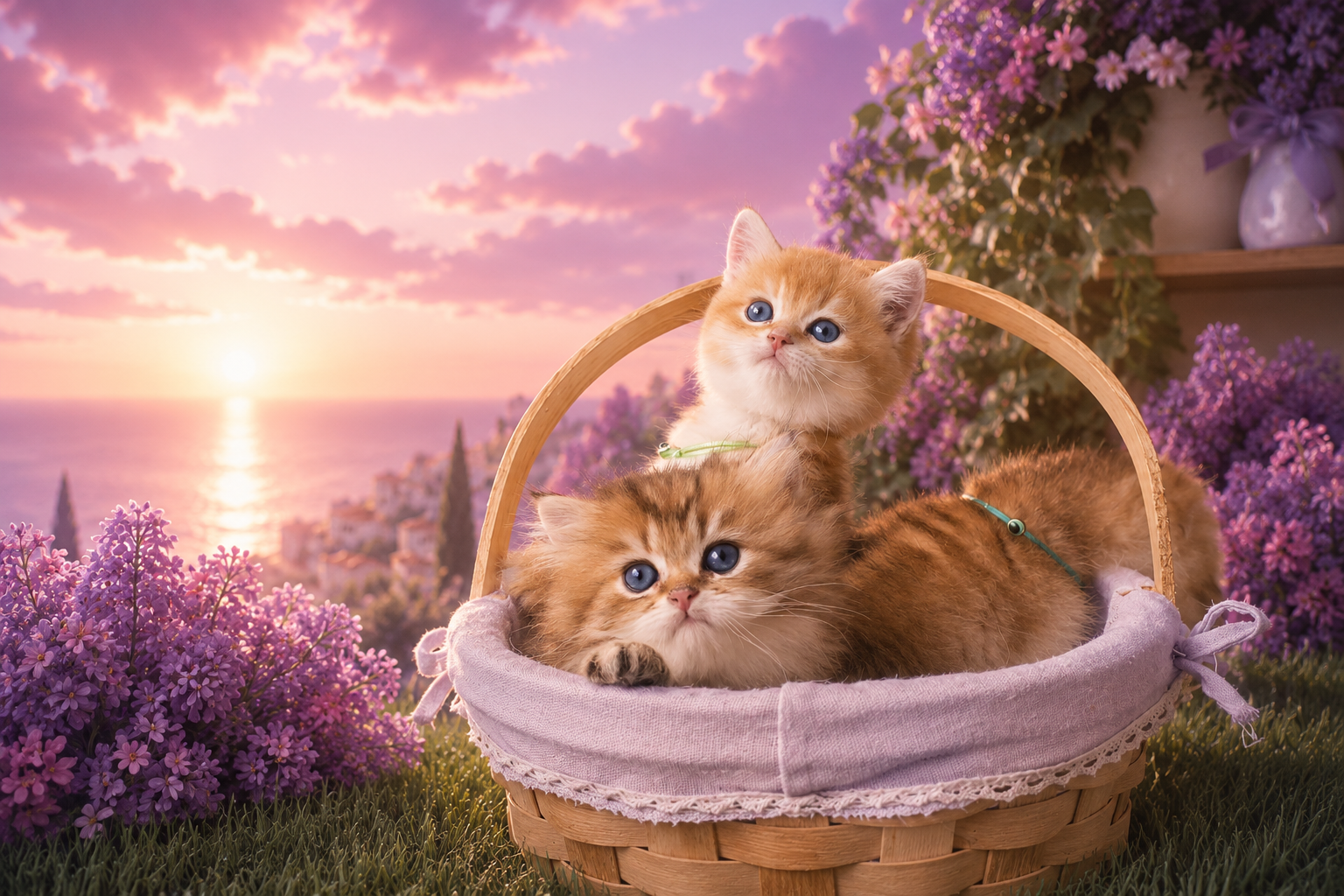
As covered in depth in Golden British Shorthair Explained, golden coloring — a warm, tipped pattern lacking the silver inhibitor gene — is considerably less common than silver, largely because it requires both parents to lack the dominant inhibitor gene entirely. Golden point, which adds the colorpoint restriction gene on top of golden coloring, is rarer still, and remains one of our specialty focuses at Solette.
While standard silver (chinchilla and shaded) is relatively well-established, silver point — combining silver coloring with colorpoint restriction — is a much less commonly bred combination, requiring careful management of both the dominant inhibitor gene and the recessive colorpoint gene simultaneously.
Chocolate is a warm, rich brown produced by a recessive variant of the brown gene, and lilac is its diluted counterpart — a soft, dove-grey with a pinkish undertone. Both are considerably rarer than blue or black, since the recessive chocolate gene needs to be present in both parents (often invisibly, as carriers) to appear in a litter, making it harder for breeders to reliably produce without specifically working these lines.
Rarer still, cinnamon (a lighter, more reddish-brown than chocolate) and fawn (its diluted, pinkish-beige counterpart) exist within some British breeding lines but remain uncommon, in part because they require an even more specific, less widely distributed recessive gene combination than chocolate and lilac.
Beyond golden point and silver point specifically, colorpoint British Shorthairs and Longhairs come in the full range of base colors restricted to the extremities — seal point, blue point, chocolate point, and more — each requiring two copies of the recessive colorpoint gene, making any colorpoint variety inherently less common than the equivalent non-pointed color.
It's worth saying plainly: rarity is a function of genetics and breeding difficulty, not an indicator of quality, health, or temperament. A rare chocolate or golden point British Shorthair is not inherently superior to a classic British Blue — it simply reflects a different, harder-to-achieve combination of coloring genes. Choosing a color should come down to personal preference, not the assumption that rarer automatically means better.
Rarity can unfortunately attract less scrupulous breeding practices, since rare colors often command premium prices. When considering a rare-colored kitten, apply the exact same scrutiny you would for any other color: ask about health testing of the parents, request to see WCF or equivalent pedigree documentation, and be wary of any breeder who seems more focused on the color's rarity and price tag than on the health and welfare fundamentals covered in How to Choose a Responsible British Cat Breeder.
Tortoiseshell British Shorthairs — a mottled mix of black and red-based pigment — are genetically almost always female, since the pattern depends on the X-linked orange gene expressing differently across two X chromosomes, a combination essentially impossible in male cats outside of extremely rare chromosomal exceptions. Bicolor (color combined with white spotting) is less about pigment rarity and more about the specific, and sometimes unpredictable, inheritance of white spotting genes, which can produce widely varying amounts of white from one litter to the next even from the same parents.
Rather than attempting to breed every recognized color, we've deliberately focused our program on golden and silver — including their shaded, shell, and point variations — over more than thirteen years. This specialization lets us understand these specific colors' genetics, common pitfalls, and ideal pairings far more deeply than a program spread thinly across many different colors, which we believe produces more consistently correct, healthy kittens within our chosen specialty.
What counts as "rare" can shift over the years as breeding trends and demand change. Colors once considered exotic and hard to find sometimes become more widely available as more breeders invest in developing them, while colors that were once common can become comparatively less popular and less actively bred. This is a normal, healthy part of how any breed's color palette evolves over decades, driven by shifting aesthetic preferences among both breeders and prospective owners.
Our honest advice, after years of breeding: choose a cat and a breeder based on health, temperament, and the quality of the breeding program first, and let color preference — rare or common — be the final, secondary decision. A healthy, well-socialized, correctly-tested kitten in a common color will bring you far more genuine satisfaction over a fifteen-plus year relationship than a rare-colored kitten from a breeding program that cut corners on health testing to chase a trendy, high-demand color.
What is the rarest British Shorthair color?
This shifts somewhat by region and breeding trends, but golden point, silver point, cinnamon, and fawn are generally considered among the rarest, due to the specific and sometimes multiple recessive gene combinations required to produce them.
Are rare-colored British Shorthairs more expensive?
Typically yes, reflecting the additional time, selective breeding, and sometimes years of line development required to produce them reliably and correctly.
Is chocolate a recognized British Shorthair color by all registries?
Recognition varies by registry and has evolved over time, with some historically debating whether chocolate and lilac reflect authentic historic British lines or introduced genetics from outcrossing. Most major registries, including WCF, now recognize these colors.
Can two blue British Shorthairs produce a rare-colored kitten?
Only if both parents happen to carry hidden recessive genes for a rare color, which is entirely possible without being visible in either parent's own coat. This is part of why genetic testing has become a valuable tool for breeders planning pairings.
Does a rare color affect a cat's registration or show eligibility?
No, as long as the color is recognized by the relevant registry (such as WCF), a rare-colored cat can be registered and shown in its appropriate color class exactly like any other recognized color.
Why don't more breeders work with rare colors like chocolate or cinnamon?
These colors require specific recessive genes that must be carried by both parents, often invisibly, making them harder to produce reliably. Many breeders focus their programs on colors that are more predictable to breed consistently rather than chasing rarity.
Is a tortoiseshell British Shorthair always female?
Almost always, yes, due to the X-linked nature of the orange gene. Male tortoiseshells do exist but are extremely rare and typically arise from an unusual chromosomal condition, and are generally unable to reproduce.
Will a rare color ever become more common over time?
It's possible, if more breeders invest time in developing correct type and health within that color over successive generations, similar to how golden has grown more established and available over the past decade compared to previous decades.
Are rare colors ever associated with health problems?
Not inherently. Rarity reflects breeding difficulty and demand, not health risk. The exception is dominant white combined with blue eyes, which carries a documented deafness association, unrelated to most of the colors discussed here.
Can I request a specific rare color from a breeder in advance?
You can express interest, but responsible breeders won't guarantee a specific rare color in an upcoming litter, since outcomes depend on genetics and can't be controlled with certainty even when both parents carry the relevant genes.
Do rare colors ever get discontinued from breed standards?
It's uncommon but not unheard of for registries to revise recognized color lists over time, usually reflecting shifts in consensus about a breed's authentic historic palette rather than the rarity of a given color alone.
Our specialty is golden and silver — including the rarer point variations. Ask us what's currently available.
Ask About Rare Colors