
Kitten Eye Color Development: A Week-by-Week Guide
Every kitten is born with blue eyes. Here's exactly when and how that changes, and what determines the final adult color.
Home / Journal / Eye Color Development
Every kitten is born with blue eyes. Here's exactly when and how that changes, and what determines the final adult color.
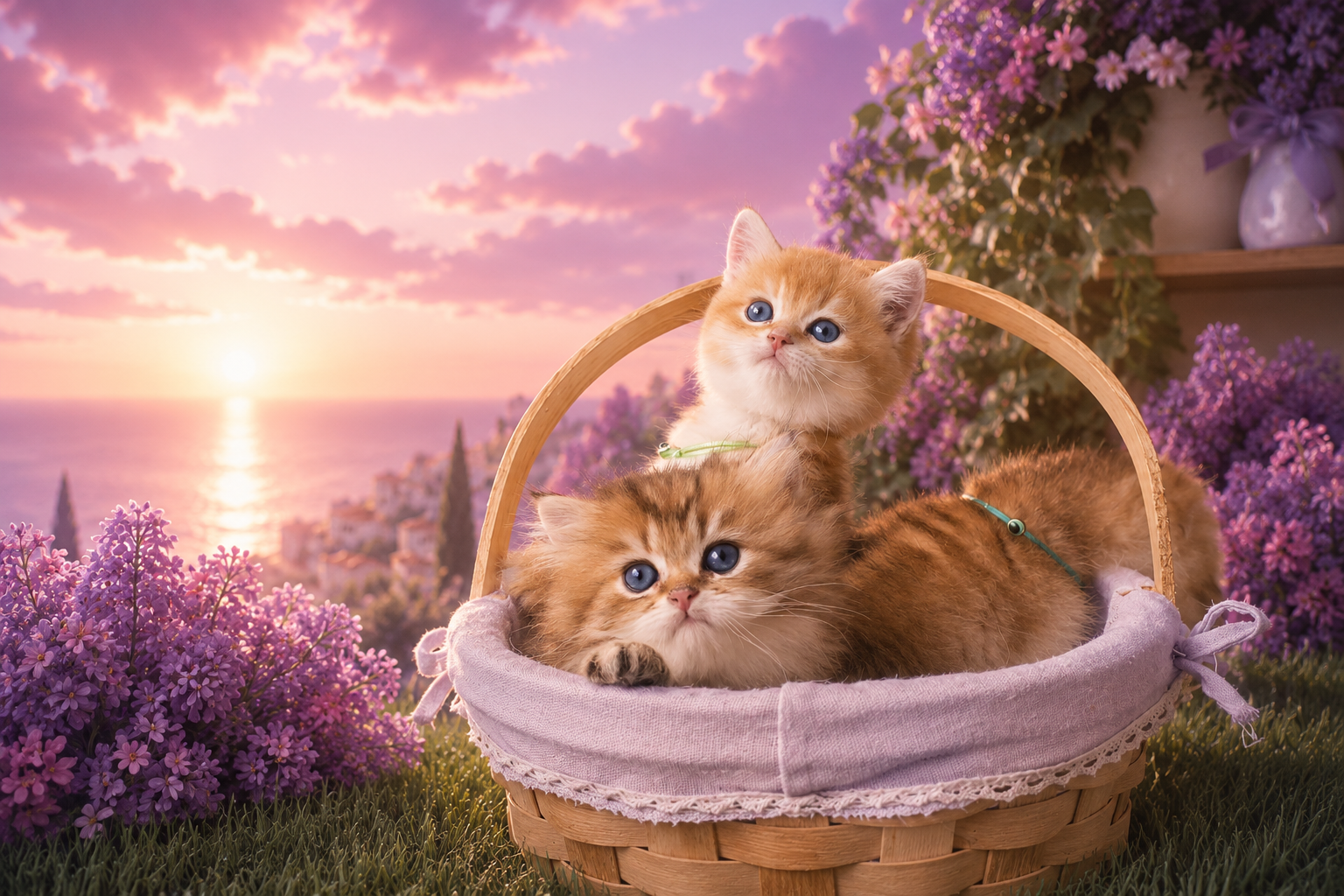
Every kitten, regardless of breed or eventual adult eye color, is born with blue eyes. It's one of the more charming universal facts of kitten development — and understanding why it happens, and when it changes, helps explain why judging a kitten's future eye color too early is more guesswork than science.
Kittens are born with their eyes closed, opening gradually between about eight and twelve days of age. At this point, the eyes appear blue — but this isn't true pigmentation. The blue appearance comes from the way light scatters through the iris tissue before melanin (pigment) has developed, similar to why the sky appears blue. Melanocytes, the pigment-producing cells in the iris, haven't yet begun producing color in a newborn kitten's eyes.
Adult eye color is influenced by the amount and type of melanin the iris ultimately produces, which is governed by a combination of genetic factors independent of coat color genetics in most cases — though certain coat colors are strongly associated with certain eye colors due to decades of selective breeding pairing them together, not because one directly causes the other. Silver and golden chinchillas and shaded cats, for instance, are bred toward green or blue-green eyes because breeders have consistently selected for this combination, not because the silver or golden coat gene itself produces green eyes.
Certain breeds and patterns — most notably colorpoint cats like Siamese, and British point-patterned cats including golden point and silver point varieties — retain blue eyes into adulthood because the same gene responsible for their point pattern also limits melanocyte activity throughout the iris, not just at the coat's extremities.
Not reliably before around six to seven weeks of age. Before this point, all kittens look essentially the same — blue — regardless of what their eventual color will be. An experienced breeder can sometimes make an educated guess based on parentage and bloodline history, but genuine confidence only comes once the transition is visibly underway.
Occasional variation, like slightly different shades between the two eyes (heterochromia) or a gradual, even color transition, is entirely normal and often quite striking rather than concerning. However, cloudiness, visible redness, excessive discharge, or a kitten squinting or pawing at an eye during this developmental window are not part of normal color transition and warrant a prompt veterinary check.
We photograph our litters regularly through the transition period, partly because it's genuinely one of the most rewarding parts of raising kittens, and partly because it helps us give prospective families realistic, up-to-date information about how a specific kitten's eyes are developing rather than relying on breed generalizations alone. By the time our kittens are ready to go to new homes at twelve weeks, their eye color is typically fully settled, so what you see when you meet a kitten is very close to what you'll have for life.
No — eye color is purely a pigmentation trait and has no bearing on visual acuity or general eye health in the vast majority of cats. The one well-documented exception involves certain white cats with the dominant white gene combined with blue eyes, which carries a statistically higher association with congenital deafness — a distinct genetic situation unrelated to the normal kitten blue-to-adult-color transition or to colorpoint breeds that retain blue eyes for unrelated genetic reasons.
The breed standard recognizes a range of eye colors depending on coat color: copper and gold for solid colors like blue and black, green for silver and golden chinchillas and shaded cats, blue for colorpoint varieties, and orange-to-copper for many other patterns. Odd-eyed cats — one blue eye and one of another color — also occur, most commonly in cats carrying certain white spotting genes, and are considered a striking, recognized variation in some registries rather than a fault.
If you bring home a kitten before its eye color has fully settled, simply take note of the timeline: most of the meaningful change happens between five and eight weeks, so a kitten going to its new home at twelve weeks should already show its essentially final adult eye color. Any further changes after this point tend to be extremely subtle — a slight deepening or clarifying of tone — rather than a fundamental color shift.
At what age do kittens' eyes finish changing color?
Most kittens reach their permanent adult eye color by around eight weeks of age, though some continue subtly deepening in tone until twelve to sixteen weeks.
Why are my kitten's eyes two different colors during the transition?
This is a normal, temporary part of the color-changing process for many kittens, as pigment can develop at slightly different rates in each eye. It typically evens out by the time the transition completes.
Do all golden and silver kittens end up with green eyes?
Not automatically — eye color depends on genetics and selective breeding rather than being an automatic consequence of coat color, though careful breeding programs (including ours) specifically select for green or blue-green eyes in silver and golden lines.
Is it true that blue-eyed adult cats are always deaf?
This is a myth in most cases, though it's specifically associated with the white spotting gene combined with blue eyes in certain white cats, not with normal kitten blue-eye transition or with colorpoint breeds that retain blue eyes for genetic reasons unrelated to deafness.
Can stress or illness affect a kitten's eye color development?
Significant illness during the developmental window can potentially affect overall growth and development, but typical eye color transition itself is a genetically programmed process not generally altered by minor everyday stress.
Why do some adult cats have orange or copper eyes instead of green?
Different eye colors are associated with different breeding goals and coat colors. Copper and gold tones are traditionally paired with solid colors like the British Blue, while green and blue-green are specifically selected for in silver and golden chinchilla and shaded lines.
Can I see a kitten's likely adult eye color from its parents?
Parent eye color is a reasonably useful indicator since it's partly heritable, though it's not a guarantee, given eye color's polygenic nature. A breeder familiar with their own bloodline's typical outcomes can offer more specific guidance than parent color alone.
Do kittens' eyes look different sizes before adult color sets in?
Kittens' eyes often appear proportionally larger relative to their face during early development, which is normal and simply reflects typical growth proportions rather than anything related to the color transition itself.
Is it normal for one eye to change color before the other?
Yes, this asymmetric timing is a common and harmless part of the transition process, with color often appearing first near the pupil and gradually spreading outward in each eye at a slightly different pace.
Do British Shorthairs and Longhairs share the same eye color timeline?
Yes, eye color development follows the same general schedule regardless of coat length, since the process is governed by iris pigmentation rather than anything related to hair length or texture.
Watching a litter's eyes change color is one of our favorite parts of raising kittens — ask us about our current litter's progress.
Ask About Our Kittens